Projects / FYBR.

Case study · 2026 · Self-initiated concept · Service design · Mobile app

Make a garment’s impact
readable at the rack.

Fybr. is a clothing tag and an app. Shoppers see a checked A–E grade next to the price, scan to see why, and keep the garment’s history when they repair, resell or recycle it.

Role
Solo: research, service design, UI
Timeline
Apr – May 2026
Type
Self-initiated concept
Status
Concept. Not tested with shoppers yet
Platform
Printed swing tag, plus a phone app
01 · The short version

Fybr., on one screen

Problem

Shoppers pick between near-identical tees in seconds, with only a price and a vague “eco” tag to go on.

What I found

EU rules will soon require this data. Nobody has designed how a shopper actually reads it, or who is to blame when it’s missing.

What I made

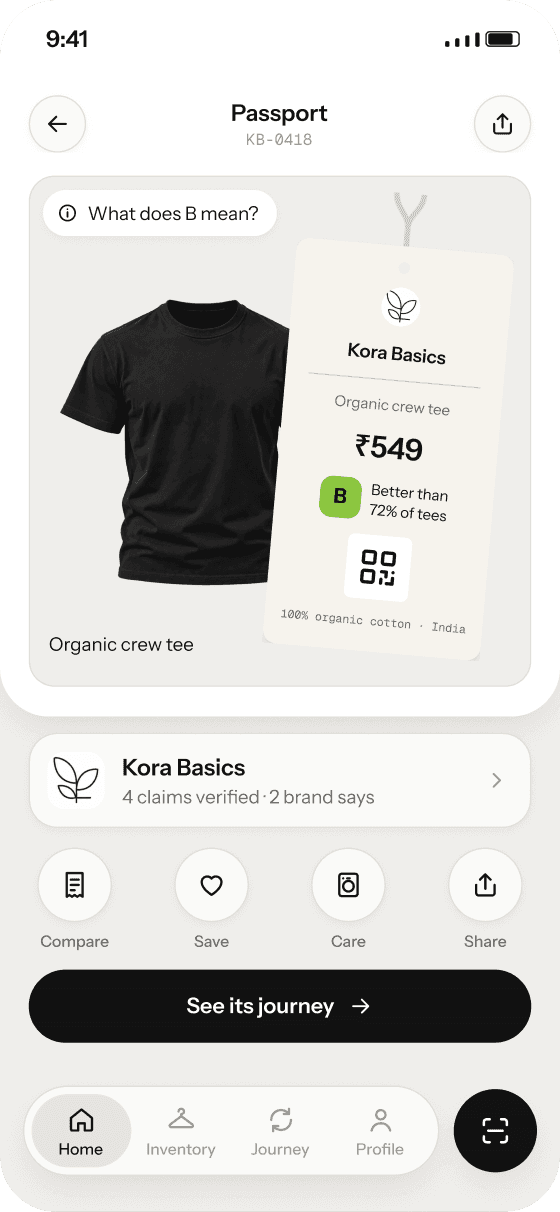
A checked A–E grade on the price tag, a scan that explains it, and a record that stays with the garment after the till.

How it came together

Six steps, four decisions, all leading back to the tag.

The process at a glance before the detail: what I did, what each step left behind, and how a finding became a screen.

The process

  1. Read the rules6 sources

    What a passport must hold

  2. Talk to shoppersInterviews

    3 habits, 5 findings

  3. First conceptMid-semester

    An app with four scores

  4. Critique and cut5 findings

    Scope cut to the tag

  5. Tag and service6 moments

    Service map and flows

  6. App, then a second look12 screens

    Fixes under “What changed”


How the decisions added up

Research foundSo I decidedThe critique changedWhere you see it
Price, style and fit decide it in seconds→Print the grade beside the price→The app-first passport was cut; the tag is the product→Digital tag
Shoppers want an answer, not a spreadsheet→One A–E grade→Four scores (7/10, 8.2/10, 88) became one letter→Scan result
Nobody believes green claims→Show who checked each claim→The reasons moved above the big tag picture→Passport
Brands hold the data; shoppers carry the blame→Missing data caps the grade at C→“Data unavailable” became “Not shared by Loom & Co”→Compare
Read each line left to right: what the research found, the decision it led to, what the critique changed, and the screen where you can see it.
01The problem

Shoppers do care. They just can’t see the impact when they choose.

Saturday, 4 pm, a fast-fashion store in Pune.

Two black tees: ₹499 and ₹549. One will last.

Nothing on either tag says which.

Shoppers are told sustainability is their job, like switching to paper straws. But brands hold all the facts. The shopper gets the guilt without the information.

Today

Brand X

Black crew tee

₹499eco-friendly ✓
Kora Basics

Black crew tee

₹549conscious choice

Two slogans, no way to compare. The cheaper tee wins by default.

With Fybr.

Brand X

Black crew tee

₹499DBetter than 18% of tees
Kora Basics

Black crew tee

₹549BBetter than 72% of tees

One grade in the same place as the price. ₹50 more buys a B and roughly twice the life.

An example built from what shoppers told me in interviews. The brands are made up.
2–8%of global greenhouse-gas emissions are linked to fashionUN Alliance for Sustainable Fashion
92Mtonnes of textile waste every yearNiinimäki et al., 2020
79Tlitres of water used by the industry every year
<1%of clothing material is recycled into new clothingEllen MacArthur Foundation, 2017

Why now: the passport is becoming law

WhenWhat happensWhat it means for shoppers
Mar 2020EU Circular Economy Action PlanSets the goal: clothes that can be traced, reused and recycled
Jul 2024New EU product rules (ESPR) come into forceProducts will need a digital passport: an online record of what they are made of and how
Jul 2026Big brands can no longer destroy unsold clothesWaste becomes the brand’s problem, not the shopper’s
2027–28Passport rules for clothing expectedIndian exporters to the EU will need passport data too

Most work on these passports is about following the rules: collecting, storing and checking data. Almost none of it asks how a 22-year-old at a clothes rack will read it. That is the gap I worked on.

Problem statementImpact data already exists in the supply chain, and passports will soon make it mandatory. But shoppers can’t see, trust or act on it at the moment they choose, so sustainability stays one person’s burden instead of a shared one.
02Research

I looked at what a passport holds, and at what shoppers actually read.

Who holds the data

All of it comes from someone other than the shopper, and none of it reaches the tag.

Who holds itWhat the shopper gets todayWhat Fybr. shows
Brands and manufacturersVague “eco” claims with no proof for this itemThe grade, and “Not shared by [brand]” where data is missing
Independent checkers, e.g. GOTSA logo, if the brand chooses to print itA “checked” mark on every claim
Retailers and store staffA price, a size, a sloganThe grade beside the price
Repair, resale and recyclingNothing. The story ends at the tillA passport that moves with the garment
The shopper knows the least but is asked to care the most. The design has to shift that back onto the brands.

What shoppers told me

I usually just pick what looks good and fits my budget. I don’t really think about how it’s made.
Shopper interview
I’ve seen tags like eco-friendly, but I don’t know what that means, or if it’s actually true.
Shopper interview
If the information was simple and right in front of me, I might consider it. I won’t go searching.
Shopper interview

Five findings, five design moves

FindingWhat I heard or sawSo I designed
Impact is invisible when people choosePrice, style and fit decide it in seconds, at the rackThe grade beside the price
Shoppers want an answer, not a spreadsheet“If it’s simple and in front of me, I might consider it.”One grade; the detail lives behind a scan
Nobody believes green claims“Eco-friendly” is seen everywhere and believed nowhereWho checked each claim, on every claim
Responsibility sits with the wrong personBrands hold the data; shoppers are asked to careMissing data lowers the brand’s grade
Buying is the only moment of attentionAfter the till: no feedback, no guidance, then the binA record that carries on after the till

Labels people already trust, and what Fybr. borrows from each

ABCDE
Nutri-Score (food)

A letter plus a colour: a verdict in a glance

→ The A–E letter
Energy rating

Ranked within its own kind, so a fridge is compared to fridges

→ Tees compared only with tees
Care label

Boring, familiar, always in the same place

→ The grade sits where the price is
Checked
Hallmark / ISI mark

Trusted because a named outside group checked it

→ “Checked by GOTS” on each claim
People

Three shoppers, one rack, three different worries.

These are shopping habits, not types of people: one person can be all three in a week. I designed for Riya first. If the tag works for someone with 90 seconds and no interest, it works for everyone.

HabitTheir questionWhat they needUses most
Riya · quick shopper (main user)“Which one is better, in a glance?”A grade she can read beside the priceThe tag, then Compare
Arjun · careful buyer“Is this claim actually true?”Proof: who checked what, and howPassport, “Why it’s a B”
Neha · runs the household“What do I do with clothes we don’t wear?”A next step for every pieceWardrobe, Pass it on

One garment, stage by stage

TodayWith Fybr.
Tag shows a gradeGrade beside priceScan shows whocheckedHonest receiptCare tips from thepassportPassed on with itsrecord“eco-friendly?”“Is this even true?”Cheaper tee winsNo care adviceBinNoticeBrowseCompareBuyWearDone with it
My estimate from interviews and desk research. Today the experience drops at “Compare”, when the claim can’t be checked, and ends in the bin. With Fybr. it rises at the rack and carries on after the till.
The problem, rewrittenShoppers need one sign they can trust at the rack, with details they can check and a clear next step after buying. That way, brands share the responsibility.
03Key decisions

Five choices, and what each one cost.

Three rules: readable in a glance, easy to check, fair to the shopper. The tag is the product; everything after it is optional.

DecisionInstead ofI choseBecauseThe cost
The tag before the appAn app-first passport: download, scan, then decideThe grade printed on the tag; scanning is optionalThe choice happens at the rack in seconds. Nobody downloads an app mid-aisleA tag has room for one letter and one line; all detail moves behind the scan
One grade, not four scoresSustainability 7/10, impact 8.2/10, trust 7.4/10 and a score of 88One A–E grade, compared only with similar clothes, with a check mark on each claimFour numbers were exactly the confusion shoppers describedOne letter hides trade-offs like water vs carbon; the passport shows them
Show what’s missing, and whose it isHiding gaps, or a neutral “Data unavailable”“Not shared by [brand]”, shown openly; the grade can’t go above CA blank should cost the brand, not confuse the shopperBrands will push back, so “How grades work” has to explain the cap plainly
Reward keeping, not buyingCredits for every purchaseCredits only for repair, resale and recycling. Later cutRewarding purchases rewards more fast fashionNobody could answer who pays for credits, so the app now nudges care and passing on instead
“Less than typical”, never “you saved”“You saved 1,800 L of water!” on the receipt“About 1,600 L less than a typical tee (estimate)” with “How we estimate”Buying a shirt saves nothing. An honest comparison still motivatesLess exciting to read, but it holds up if anyone checks
How I worked

From a dashboard nobody would open to a tag everyone already reads.

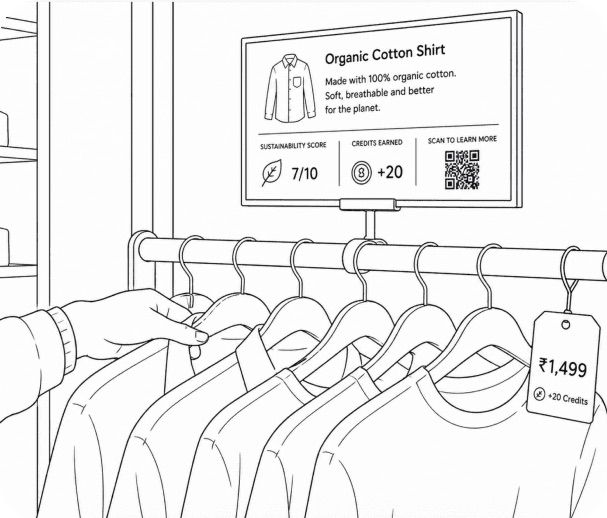
The steps are mapped in “How it came together” near the top. This is the storyboard from my first concept: the whole service in six moments.

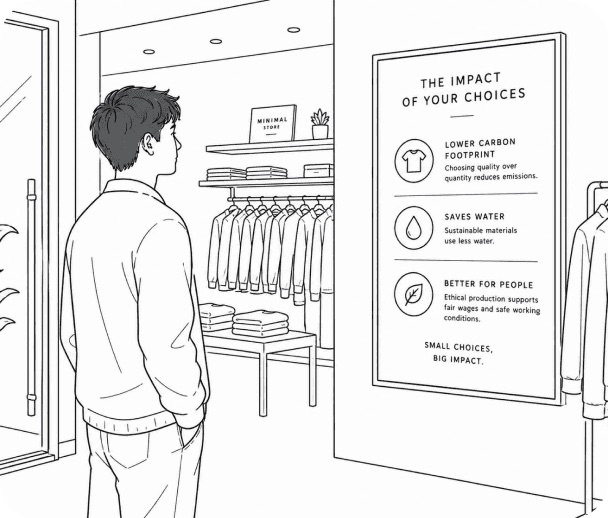
01 · Context in store

A small reminder that impact exists. Optional, not a lecture.

02 · The grade at the rack

Price and grade side by side on the tag the shopper already reads.

03 · Scan for the why

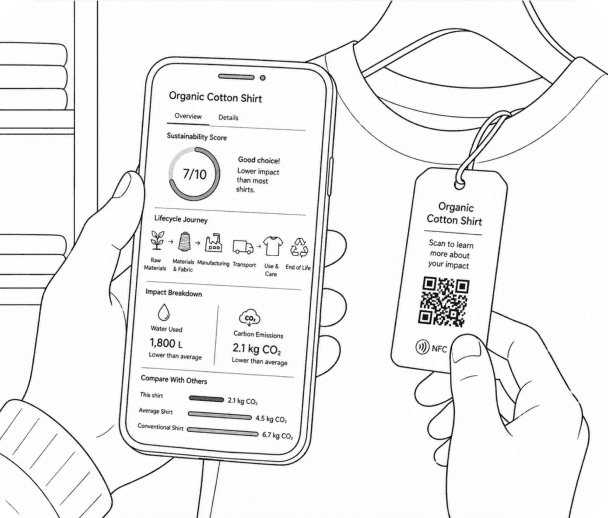
The passport opens: grade reasons, materials, who verified what.

04 · Linked at billing

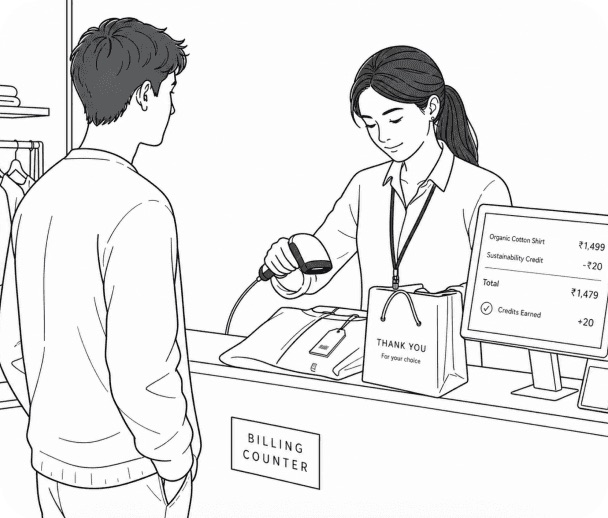
The item joins your digital wardrobe, only if you say yes.

05 · An honest receipt

“Used ~1,600 L less water than a typical cotton tee (est.)”

06 · Pass it on

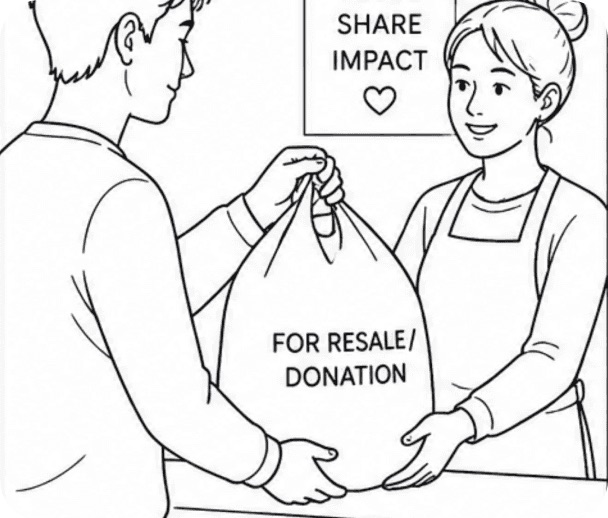
Repair, resell or recycle. The record moves with the garment.

The service in six moments, from my mid-semester storyboard: context in store, the grade at the rack, scan for the why, linking at the till, an honest receipt, passing it on.
What changed

My first version gave shoppers homework. The final one gives them an answer.

Version 1 (mid-semester)NowWhy
Four scoresOne graded letterA letter reads in a glance
Credits for buyingNo credits: care, repair and pass-it-on insteadRewarding purchases rewards fast fashion, and nobody pays for credits
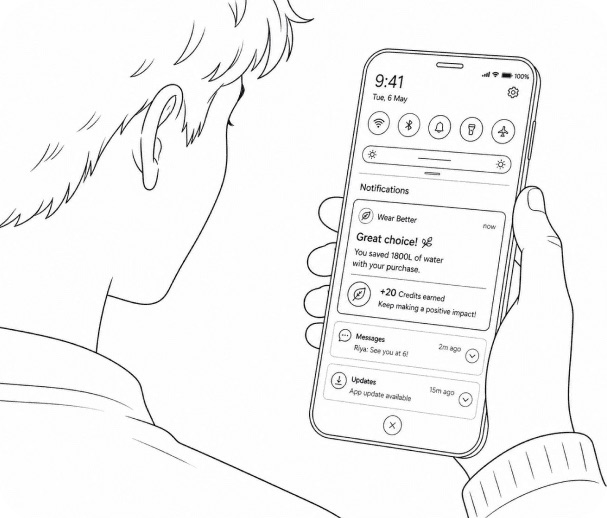
“You saved 1,800 L”“Less than a typical tee (estimate)”Buying saves nothing
Aryan, Stockholm, real brandsRiya, Pune, made-up brandsBuilt from my own interviews, and no real brand is accused
Linked to a profile without askingA clear yes or no at the tillSaying no must cost nothing
Structure and flows

Only the tag is required. Everything after it is a door you can choose to open.

How the app is organised, the two journeys that matter, what happens when things go wrong, and who does what behind the scenes.

How Fybr. is organised

Printed tag: grade, rank, QRworks with no phone, no app and no account
Scan (always one tap away)
  • Tag found: grade, water, stages traced
  • → Compare with the last tee scanned
  • → Passport
  • Opens from the black button on every tab
Passport
  • Why it’s a B: each claim, who checked it
  • Against a typical tee (estimate)
  • Brand: how much it shares
  • → Journey 1/2: at a glance
  • → Journey 2/2: how it was made
  • Works without an account
Home
  • Scan a tag
  • Your wardrobe at a glance
  • Recently scanned
Wardrobe
  • By type or by brand
  • → Item: care from its passport, your time with it
  • → Find a tailor · Pass it on · Recycle
  • Needs an account; added only if you say yes at the till
Profile
  • Account, privacy, what is shared
At the till and after
  • Add to wardrobe? Yes / No thanks
  • Pass it on: what the next owner sees
  • New in this round

Two journeys that matter most

At the rack
Sees two tees⟶Reads the grade on the tag⟶Wants to know why?⟶Scan⟶
Tag found⟶Passport⟶Another tee?⟶Compare⟶Pays at the till⟶
Add to wardrobe?⟶Wardrobe, or nothing saved
After the till
Something changes⟶Wardrobe⟶Item⟶What now?⟶Find a tailor⟶
Pass it on⟶Recycle⟶Next owner scans the tag⟶Passport carries on
Screenin the appChoice?shopper decidesReal worldno phone neededStart / end
Most shoppers stop at the tag, and that is fine: the grade already did its job. Every later step is optional, and “No thanks” at the till still gets an honest receipt.

When things go wrong

SituationWhat the shopper seesWhy
The tag won’t scan“Hold your phone to the tag” (NFC) or “Type the code”A torn tag shouldn’t end the journey
No passport for this item“Not rated yet. Brand X hasn’t published one. That’s the brand’s gap, not yours.”The blank belongs to the brand, and says so
No signal in the storeThe printed grade, plus a saved copy on the tag’s chipThe tag works on its own
Said “No thanks” at the tillNothing is linked. Scan the tag later to add itSaying no must cost nothing
A grade changes later“D → C: the brand shared its dyeing data”, with the date and who checked itGrades can move; every change is logged

Who does what, from factory to second owner

MadeOn the rackScanCompareBoughtKeptPassed onShopperReads the gradeScans the tagHolds two teesSays yes or noWashes, repairsResells or gives awayFybr. appShows passportShows the gapAdds to wardrobeCare and repair tipsHands record overStore staffHangs tagged stockAsks at the tillBrandRegisters the teePrints the tagShares data or gets capped at CUpdates the passportChecker (e.g. GOTS)Checks claimsRe-checks on update

The shopper row is the only one most people see. Everything below it is what makes a single letter on a tag trustworthy.

04The product

One tee, from the rack to its second owner.

Follow a ₹549 organic tee, grade B. Only the tag is required. Every step after it is optional.

01

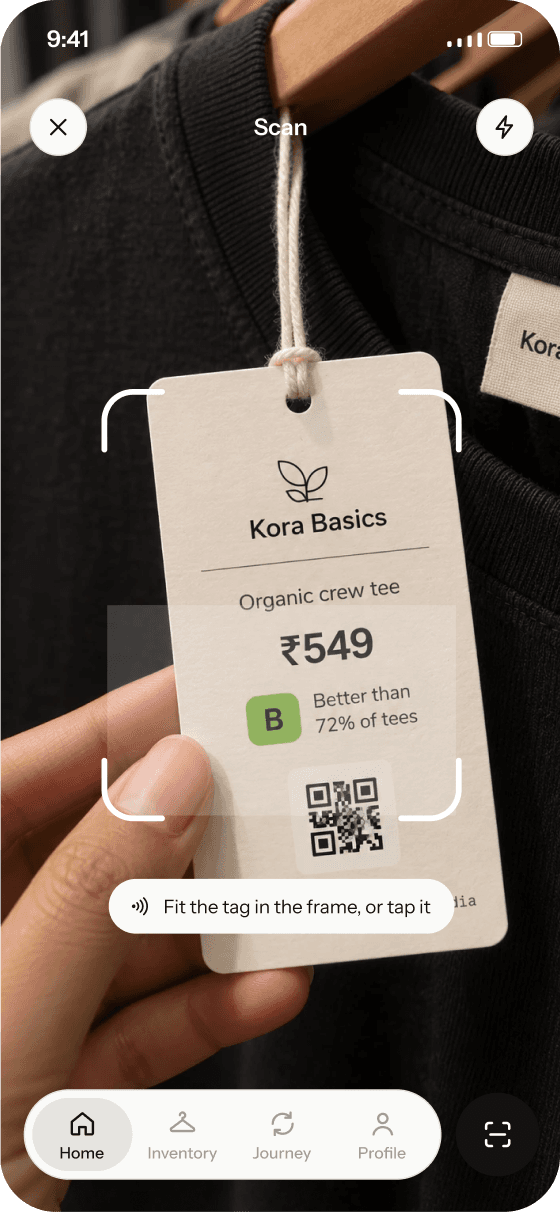
A grade beside the price

The brand registers the tee and an independent checker confirms its claims. What reaches the rack is one letter, printed where shoppers already look.

  • Works with no phone, no app and no account.
  • Letter, colour and position together, never colour alone.

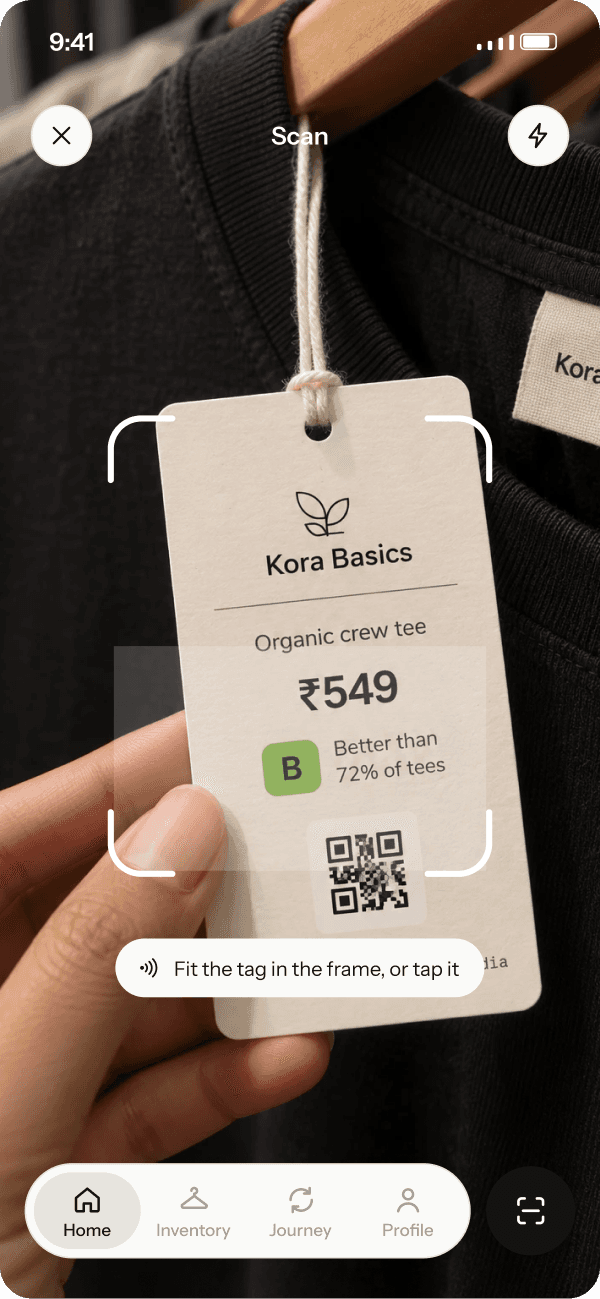
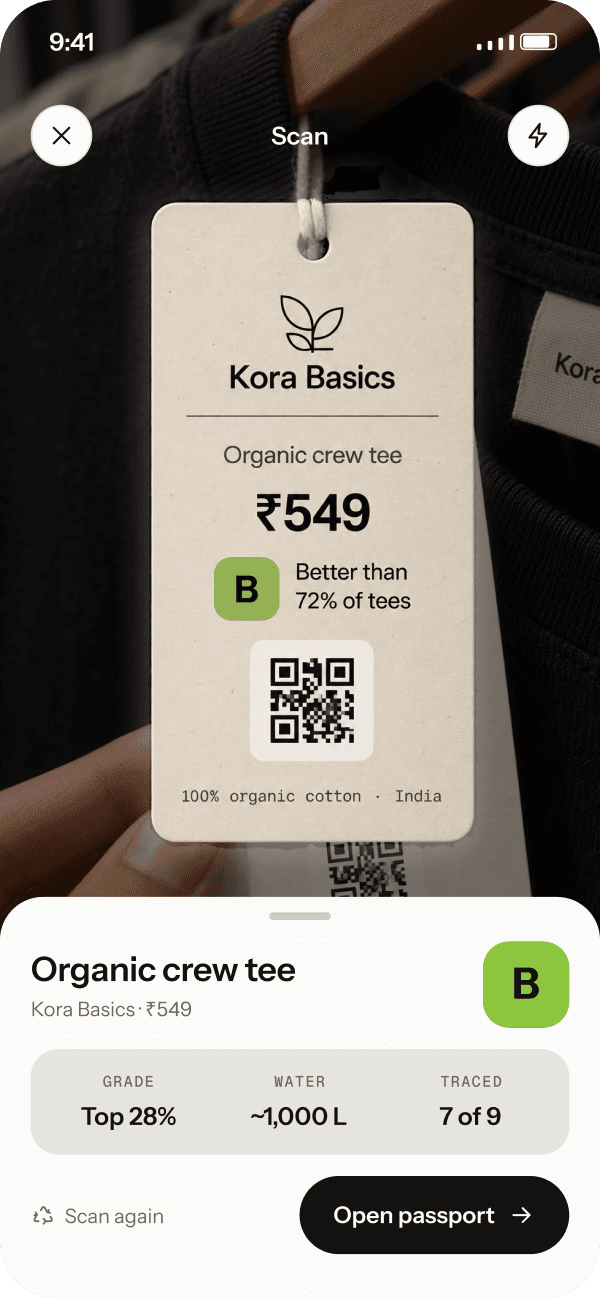
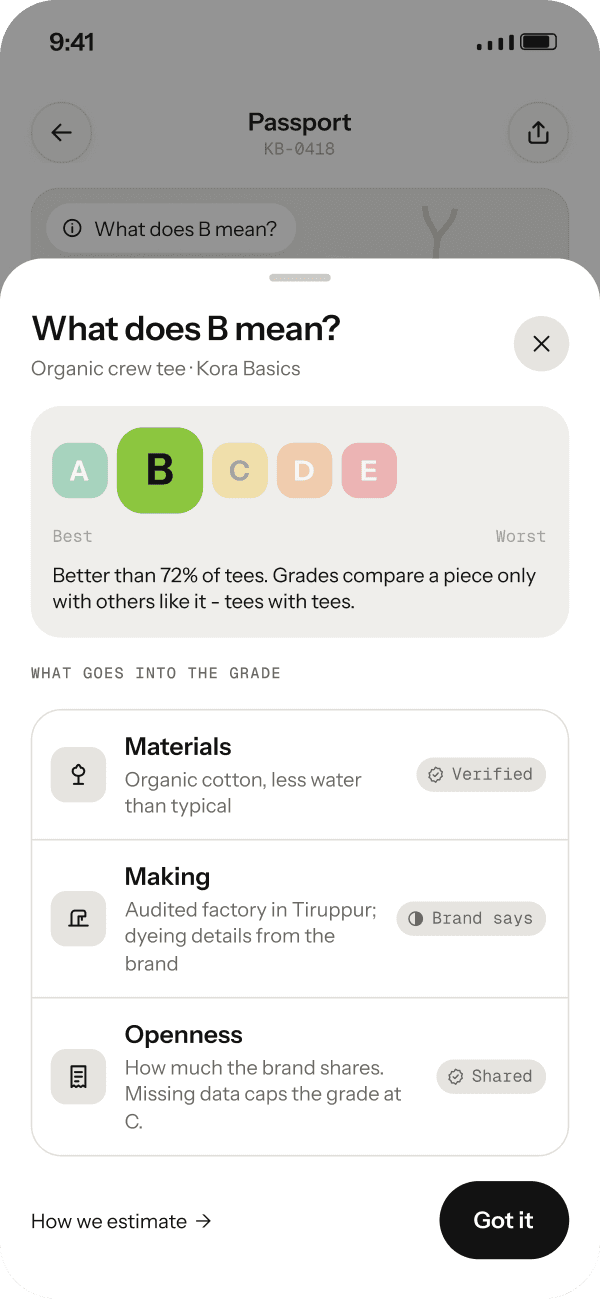
Scan, result, then the grade explained. The scan frames the tag and says what to do: fit it in the frame, or tap it. The result sheet shows the grade, water and how much of the chain is traced. “What does B mean?” opens the A–E scale and the three things the grade is built from.

02

Scan for the why

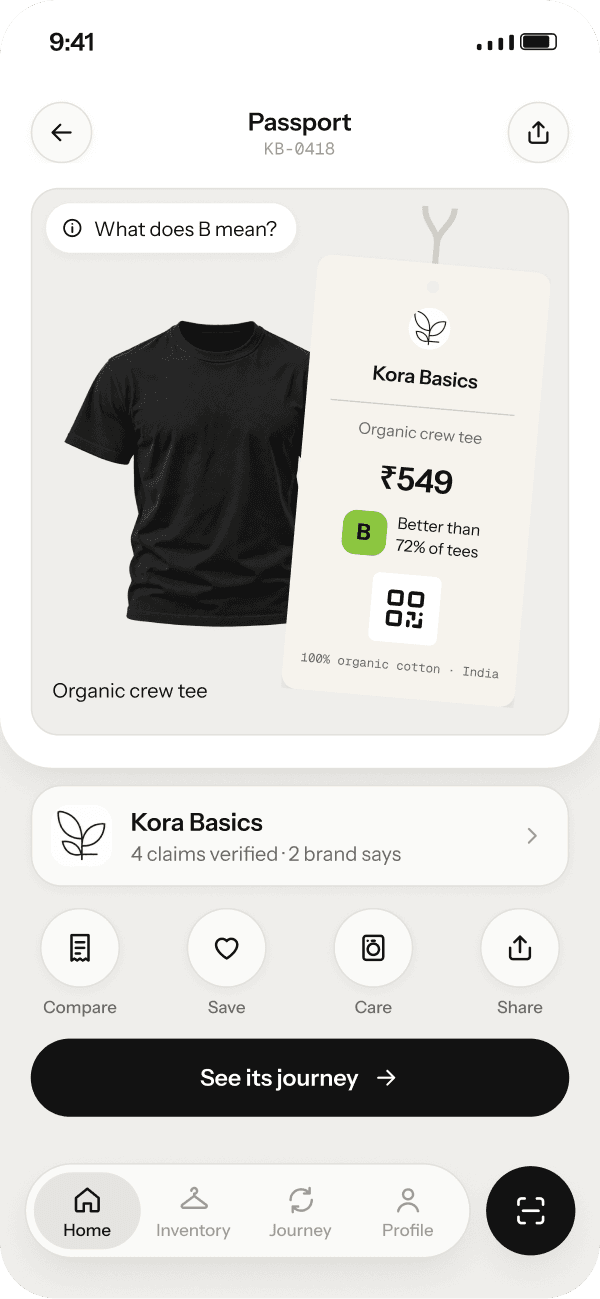
The passport says why it is a B, who checked each claim, and how it compares with a typical tee.

  • Three reasons, each marked “checked by GOTS” or “stated by the brand”.
  • Impact as “against a typical tee (estimate)”, never “you saved”.

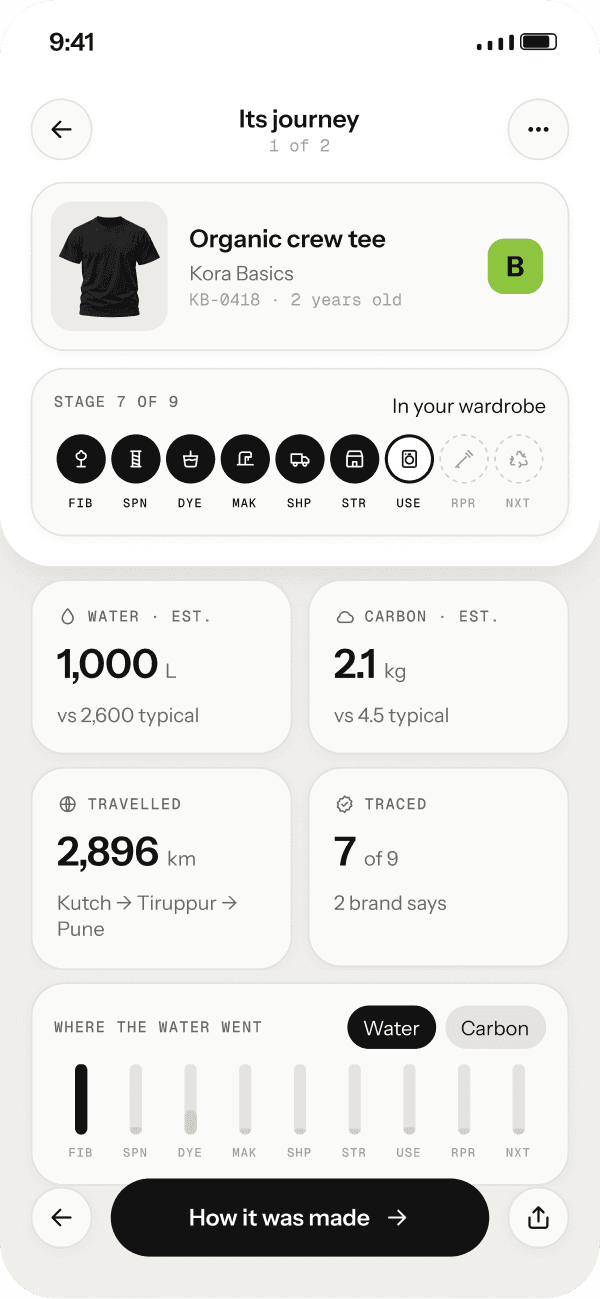
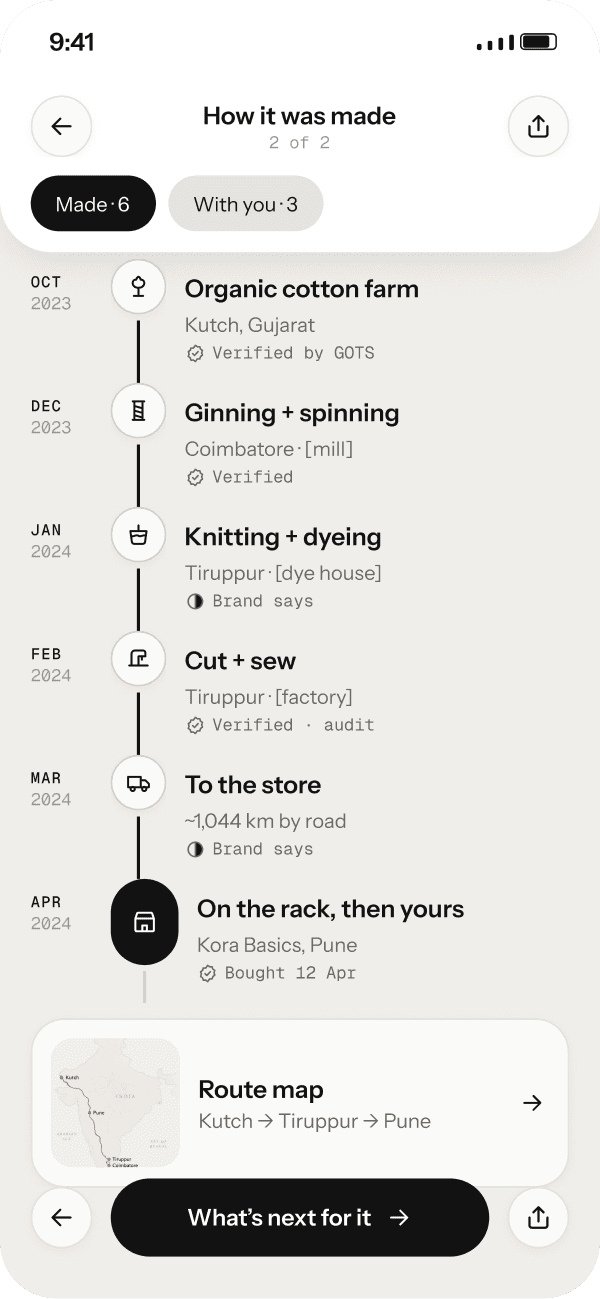
Passport, then the journey in two parts. At a glance: stage 7 of 9, water and carbon against a typical tee, and how far it travelled. How it was made: each stage dated, placed and marked “verified” or “brand says”, with a route map at the end.

03

Compare, then keep the one you buy

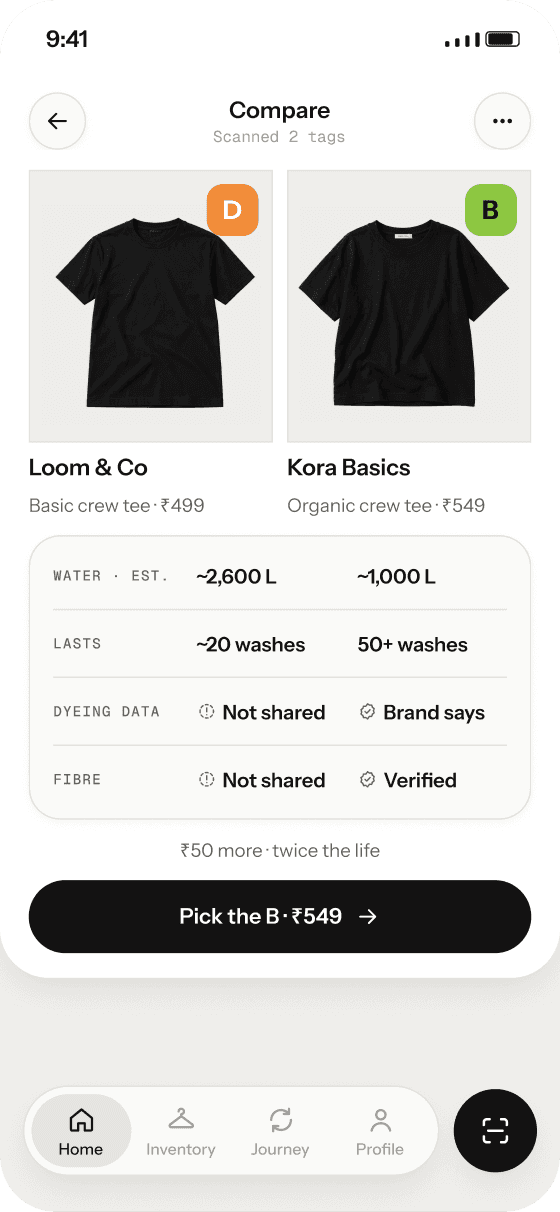
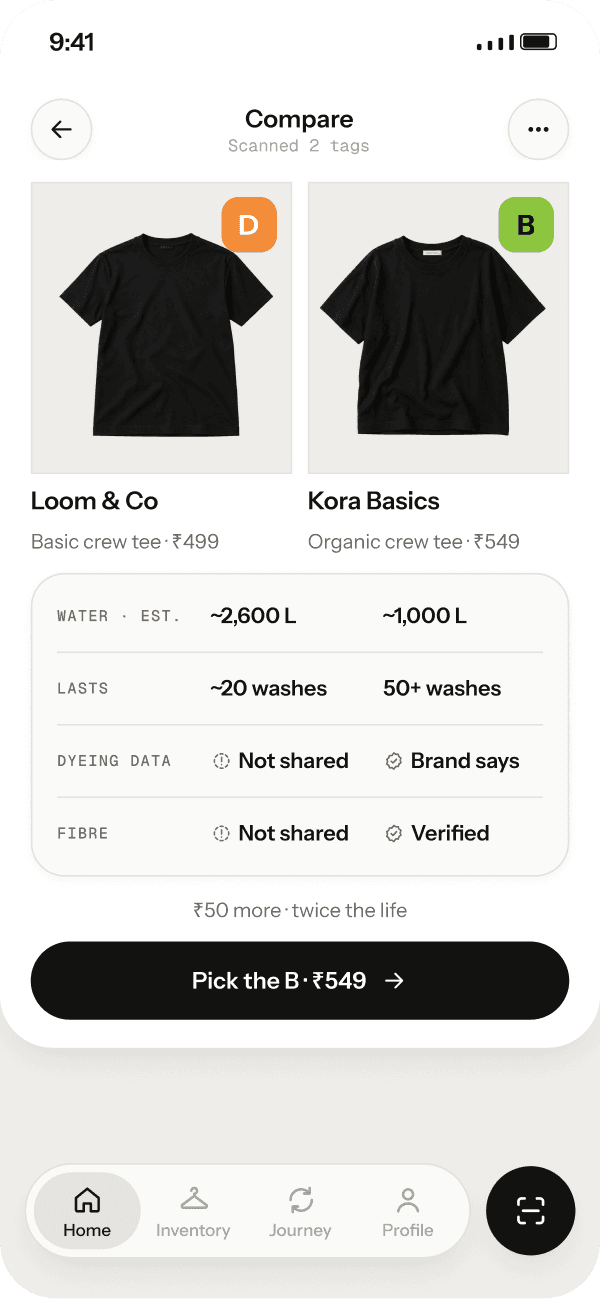
Riya puts the ₹499 tee next to the ₹549 one. Loom & Co’s missing data is named, and it keeps their tee at a D. Whatever she buys joins her wardrobe, even if she bought it online.

  • “Not shared by Loom & Co” instead of a silent blank.
  • ₹50 more buys a B and roughly twice the life.

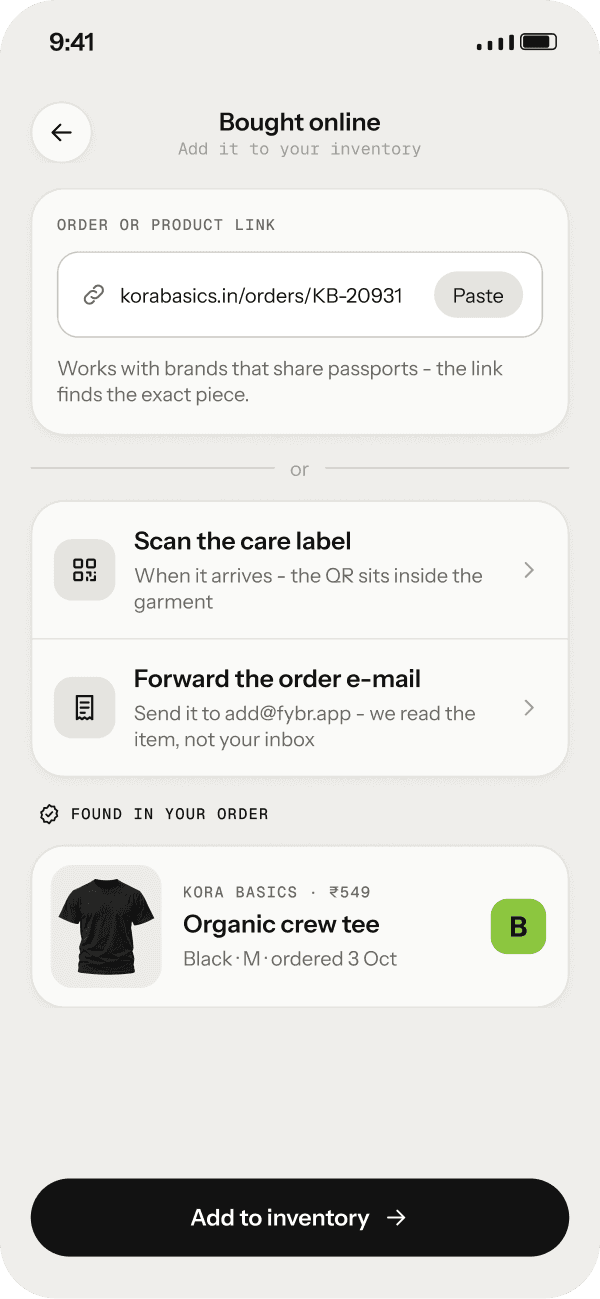
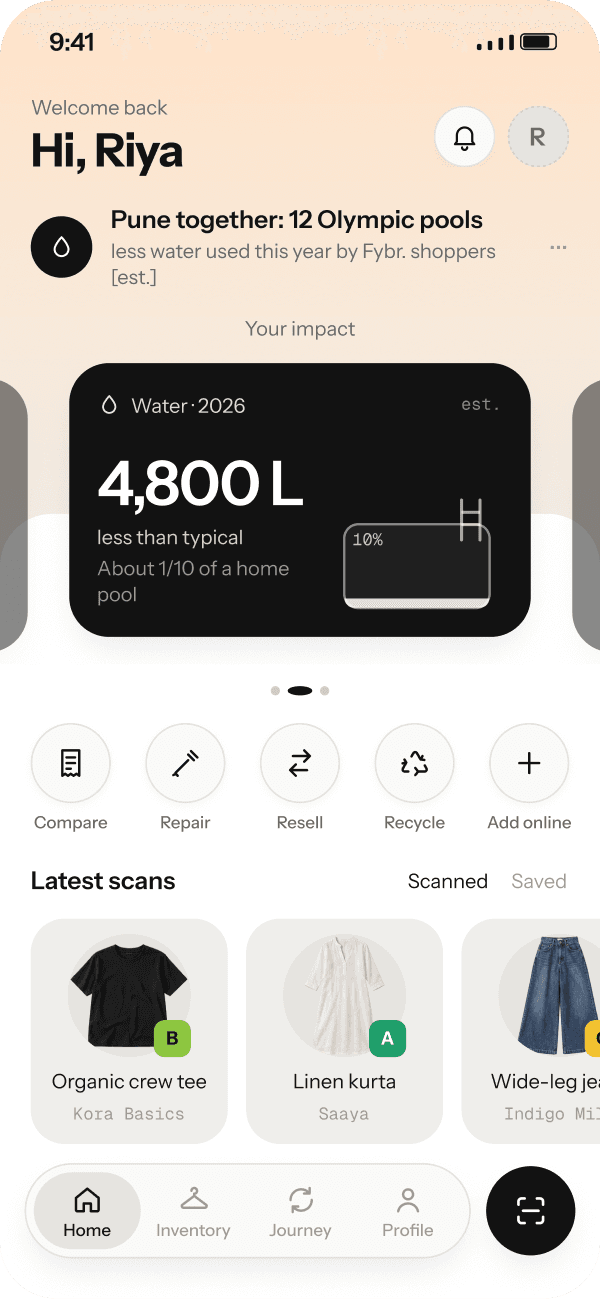
Compare, add an online order, then home. Compare ends on one button: pick the B. A tee bought online joins the wardrobe from an order link, its care label or a forwarded e-mail. Home leads with scanning and shows your impact as an estimate.

04

Keep it going, then pass it on

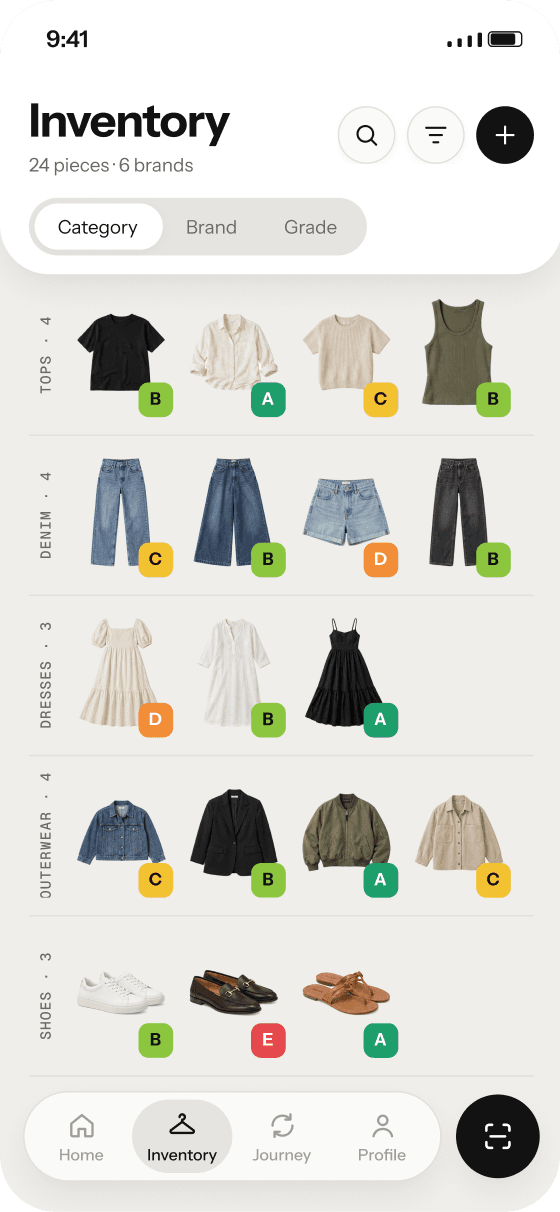
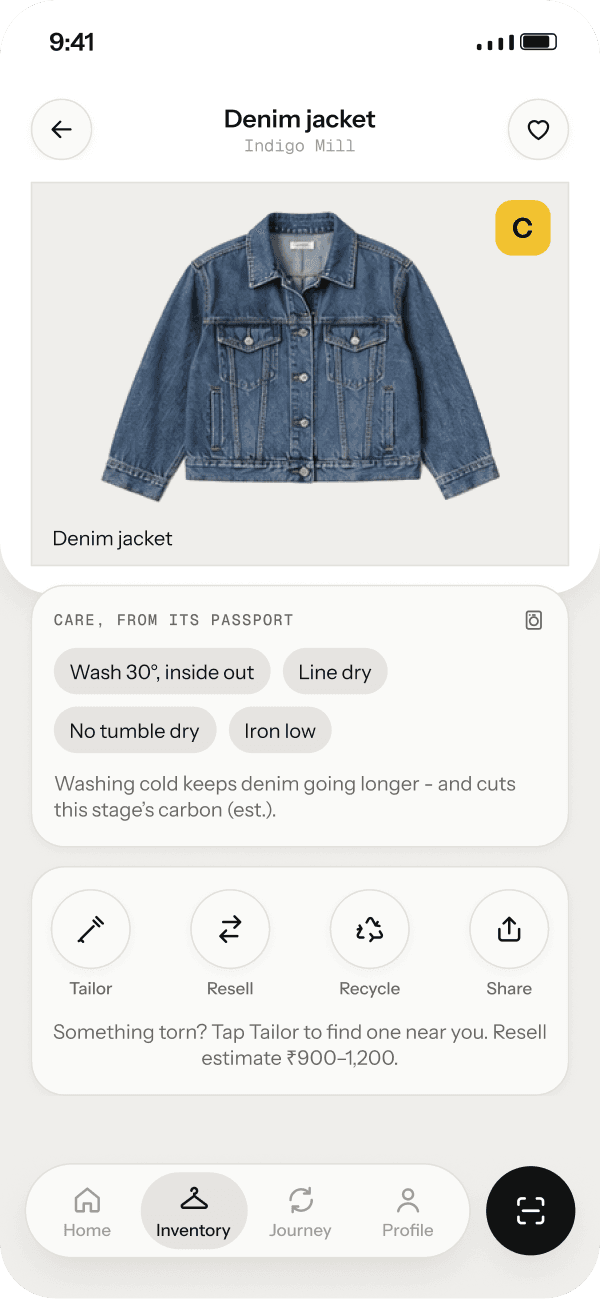
The wardrobe keeps the garment’s story going: care from its passport, repairs you booked, and a way to pass it on.

  • Fybr. only shows what it can know: passport data, care labels and what you told it.
  • The record belongs to the garment, so the next owner sees the same history.

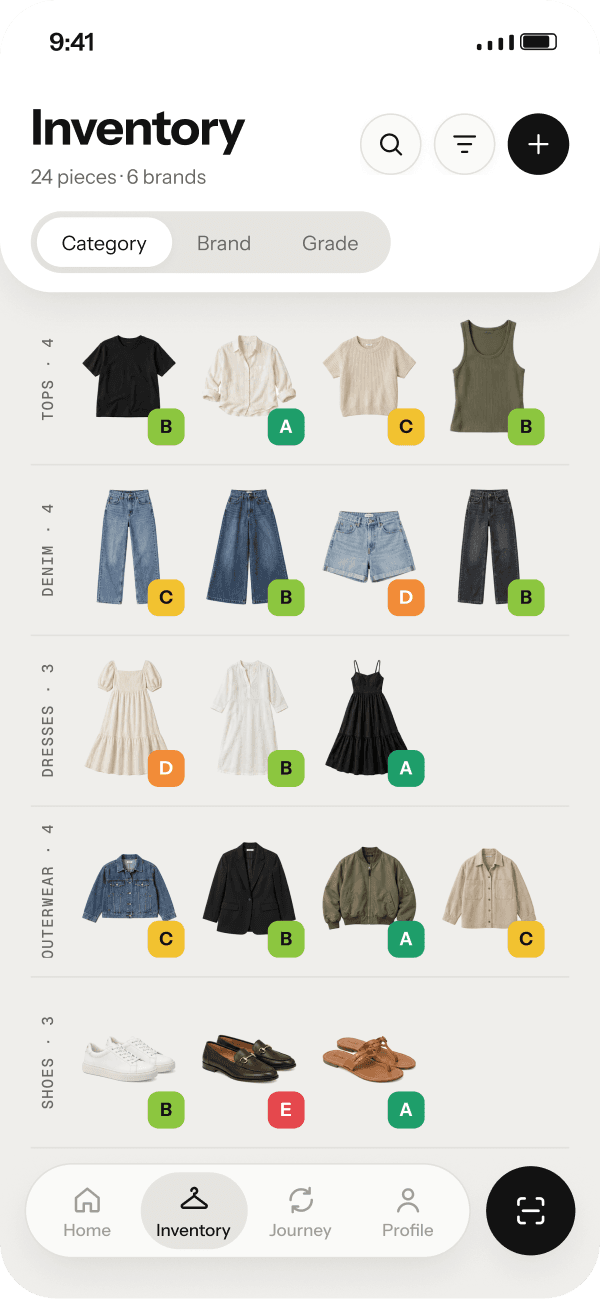
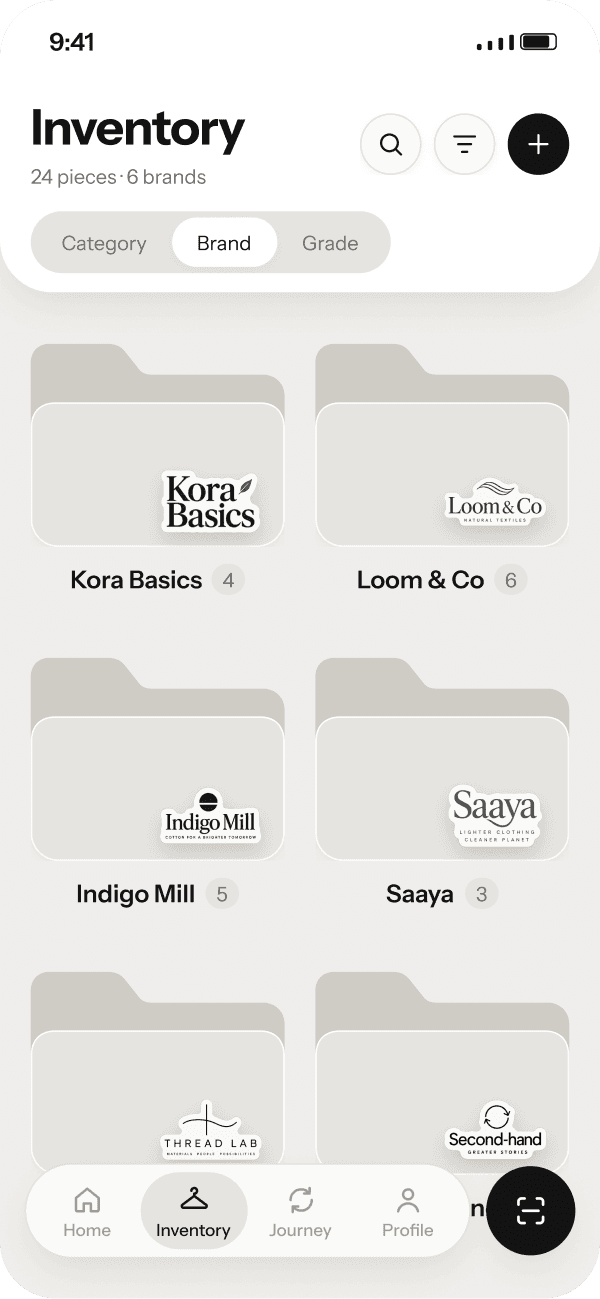
The wardrobe two ways, then one piece. By category, every piece shows its grade. By brand, pieces sit in brand folders. The item page brings care from the passport and four next steps: tailor, resell, recycle, share. Resell passes the history on; your details stay behind.

Visual system

It should look like a clothing label, not a green app.

Quiet greys and black ink. The grade is the only thing in colour, so it is the first thing you see.

GradeMeaning
AAmong the best 20% of its kind
BBetter than most
CAbout average, or capped for missing data
DWorse than most
EAmong the worst 20%
App background#EFEEEB · Warm grey, like card stock
Cards#FAFAF8 · One step lighter
Ink#121212 · Text and the main button
Secondary text#6B6965 · 4.7:1 on the background
MarkMeansEffect on the grade
✓ CheckedConfirmed by a named outside group, e.g. “Checked by GOTS”Counts in full
◐ Stated by the brandThe brand says so; nobody has checked yetCounts, but less
Not sharedMissing, and named as the brand’s gapThe grade can’t go above C
Instead ofFybr. saysWhy
“You saved 1,800 L of water!”“About 1,600 L less than a typical tee (estimate)”A comparison plus an estimate is true
“Eco-friendly”“100% organic cotton, checked by GOTS”Specific and checkable
“Data unavailable”“Not shared by Brand X”Names who is responsible
“Earn credits when you shop”“Find a tailor” · “Pass it on”Rewards keeping, not buying

Type: Instrument Sans for the app, with small labels in a regular sans instead of monospace. The letter grade always appears with its colour, so it works in black-and-white print and for colour-blind shoppers.

05Testing plan

Riskiest bet first: will anyone even notice the grade?

Nothing here is tested yet. This is the order I would test in, and what would count as a pass.

TestTaskIt works if
Rack test · 5 shoppersPick the greener tee from 4 real tees with printed tags3 or more of 5 mention the grade without being asked
5-second test · 3 tag designsA–E letter vs 7/10 vs stars: “Which tee is better?”The fastest correct answer wins
Prototype test · 5 tasksExplain a B, spot missing data, say no at the till, list for resaleShoppers blame the brand, not themselves, for missing data
06Reflection

Transparency is a design problem before it is a data problem.

What I learnedWhat it means
Responsibility is a design decisionWhose name sits next to a blank field decides who carries the blame
Less, earlierOne letter at the rack did more than ten screens after purchase
Don’t greenwash the fixA tool against misleading green claims can’t make any itself
What’s still missing

This is my own concept with example data. The grades are a proposal, not a scientific impact study, and nothing has been tested with shoppers or shops yet. Next: run the rack test, check the grading with a textile impact expert.